Deck the Halls Funny Christmas Sign SVG Review
As a designer who has spent years navigating the intersection of digital files and physical textiles, I approach every new asset with a critical eye. The holiday season is a massive revenue driver for craft businesses, but it also brings a flood of generic designs that can dilute a brand's unique voice. When I first opened the Deck the Halls Funny Christmas Sign SVG, my immediate goal was to determine if this file could transition from a simple digital download into a high-quality, tangible product that customers would actually want to hang in their homes or wear on their sweaters.
First Impressions: Mood and Visual Personality
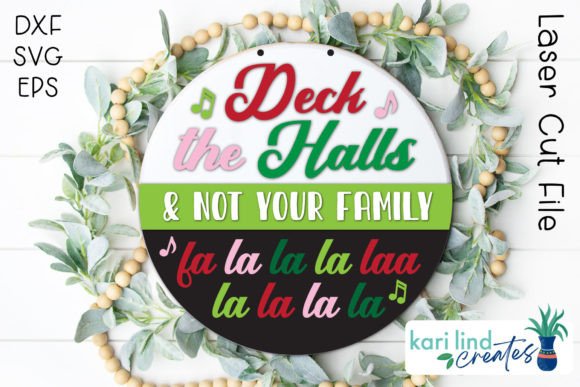
The initial visual impact of the Deck the Halls Funny Christmas Sign SVG is playful and distinctly modern. Unlike traditional, overly ornate holiday motifs that rely on heavy detailing, this design leans into bold shapes and clear typography. The "funny" aspect suggests a humorous twist on the classic carol, which is exactly the kind of personality-driven content that performs well on social media platforms like Instagram and Pinterest. For an Etsy seller or small shop owner, this kind of visual hook is essential for stopping the scroll.
However, there is a crucial distinction to make right away. This listing explicitly states that this is a vector design created for laser cutters, intended to be built with three layers of materials. It is categorized under Shapes as a 3D SVG. While this is fantastic for layered wood signs or felt crafts, an embroidery designer needs to pause here. If you are planning to use this as a direct machine embroidery design, you cannot simply import the SVG and expect a perfect stitch-out. You will need to digitize the layers yourself or adapt the concept into a true embroidery file format.
Translating 3D Layers into Stitched Reality
Let’s imagine a real-world scenario: You are preparing a custom embroidered tote bag for your holiday craft fair. The tote bag design needs to pop against the canvas texture. If you were to attempt to replicate the three-layer look of the Deck the Halls Funny Christmas Sign SVG using thread alone, you would face significant challenges. The depth created by physical layers in a laser-cut project translates differently in embroidery.
To achieve a similar effect, you might consider an applique design approach. You could cut the base shape from red felt, stitch it down with a running stitch or satin stitch border, and then embroider the text on top. This mimics the 3D feel of the original SVG. Alternatively, if you are working on sweatshirt embroidery, the density required to create that layered look might cause puckering on the knit fabric. In this case, simplifying the design to a single layer with strategic color changes would be more professional and durable.
Navigating Fabric Textures and Hoop Sizes
When adapting this design for custom apparel, the choice of fabric is paramount. The bold lines of the Deck the Halls Funny Christmas Sign SVG work beautifully on stable fabrics like denim, twill, or thick cotton blends used for aprons and pillow covers. However, if you attempt this on thin or stretchy fabrics without the proper stabilizer, the intricate edges of the lettering may distort. Always test the design on scrap fabric first.
Consider the hoop size limitations. A design with multiple distinct elements, even if simplified from a 3D model, requires adequate space to prevent the needle from hitting the hoop frame. If you are making a cap or a baby item where space is limited, you may need to resize the design significantly. Be cautious with tiny lettering; when scaled down, the humor in the sign might become illegible, ruining the customer experience. Clarity is key for personalized gifts.
Practical Considerations for Commercial Use
For those running a craft business, understanding the licensing and technical requirements is non-negotiable. Since this is a digital design where no physical item is sent, you must verify the license terms before selling finished products. Does the license allow for commercial embroidery? Can you sell the digital embroidery file after you have digitized it? These are questions you must answer before investing time into production.
If you decide to move forward with creating a physical version, pay close attention to stitch density. High-density areas can make the fabric stiff, which is undesirable for items like tea towels or blankets that need to remain soft. A balanced mix of fill stitch and open areas will ensure the final product feels premium. Additionally, think about thread colors. The festive nature of the design calls for high contrast. Test your color palette on both light and dark fabric backgrounds to ensure the message remains readable and vibrant.
Building Trust Through Quality Execution
Customers buying handmade items or boutique merchandise are looking for quality and thoughtfulness. A poorly executed version of a popular trend like the Deck the Halls Funny Christmas Sign SVG can damage your reputation. On the other hand, a well-adapted version that respects the integrity of the original design while optimizing it for embroidery can become a bestseller. Think about how the design looks in a printable mockup versus the actual stitched result. The mockup sells the idea, but the stitching delivers the value.
Whether you are creating a holiday embroidery project for a client, stocking up for a seasonal sale, or designing a one-off personalized gift, the process starts with careful evaluation. Don't just download and stitch. Analyze the structure, consider the material constraints, and plan your stabilizer strategy. By treating the Deck the Halls Funny Christmas Sign SVG as a creative brief rather than a ready-to-stitch file, you ensure that your finished product stands out in a crowded market.
Final Thoughts for the Modern Maker
The Deck the Halls Funny Christmas Sign SVG offers a fun, engaging concept that resonates with current holiday trends. Its strength lies in its boldness and humor, making it ideal for small shop products that aim to bring a smile to customers' faces. However, its origin as a 3D laser-cut design means it requires a thoughtful translation process for embroidery. By respecting the limitations of thread and fabric, testing thoroughly, and ensuring you have the right commercial permissions, you can turn this digital asset into a standout piece of commercial embroidery that adds genuine value to your portfolio.